Which existing slabs are suitable for polishing?
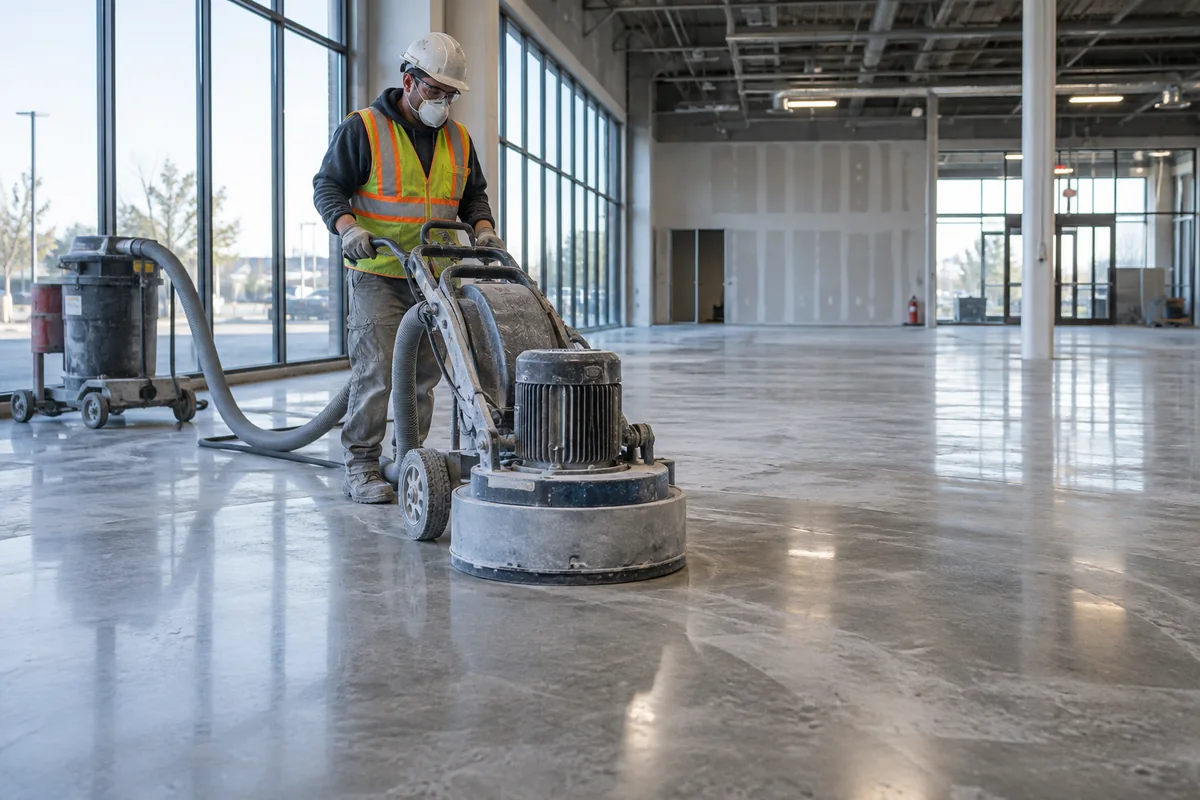
Existing slabs are suitable for polishing when their structure and surface can tolerate grinding and produce an acceptable appearance. Cracks, previous coatings, tile adhesive, oil, curing products, soft areas, patching, and elevation changes all influence the work. Some flaws can be repaired and become part of an industrial look, while widespread contamination or weak concrete may make another system more practical. A sample area helps show aggregate exposure and colour variation. Polishing does not create a perfectly uniform manufactured surface; it refines the concrete that is present. Owners should decide whether that natural variation fits the space before full production begins.
How is aggregate exposure chosen for polished concrete?
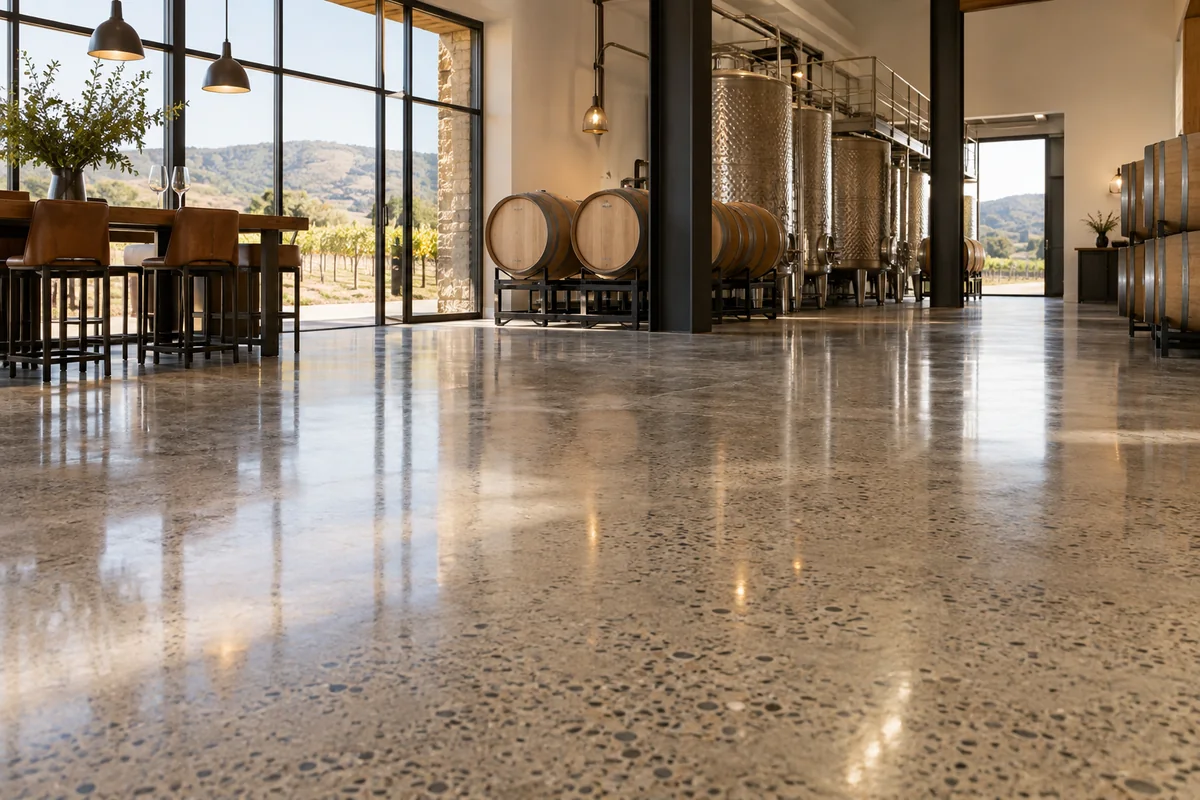
Aggregate exposure is chosen by deciding how deeply the floor will be ground. A light cream polish mostly refines the surface paste, while deeper grinding reveals sand and then larger stone. The original placement and finishing determine how evenly aggregate appears, so exposure cannot always be made uniform across an existing slab. Greater removal may also uncover repairs or low areas. Mock-ups and realistic expectations are important, especially in public-facing retail, tasting rooms, or offices. For a new slab intended for polishing, the concrete placement team and polishing contractor should coordinate mix, finishing, curing, protection, and timing from the beginning.
What sheen level works in a commercial interior?
The sheen level should match lighting, cleaning, traffic, and the desired appearance. Higher refinement can increase light reflection and produce a more formal finish, while a lower sheen may better suit workshops or understated commercial spaces. Gloss does not by itself define slip resistance, especially when contaminants or water are present. Owners should discuss the cleaning process and wet-use conditions rather than selecting from a photo alone. Sample panels under the building's actual lighting provide a better comparison. The scope should identify the grinding sequence, densifier or protective treatment, edge work, repairs, and an agreed appearance range.
How are cracks, joints and patches handled before polishing?
Cracks, joints, and patches are handled according to whether they are stable, moving, structural, or part of the floor's movement system. Repairs may reduce edge damage and make cleaning easier, but they will remain visible and may differ in colour or texture. Active cracks can return through rigid repair materials if the cause is not addressed. Control and construction joints should not be disguised as ordinary surface flaws. The owner and contractor should agree on repair colour, profile, and visual expectations before polishing. A successful polished floor celebrates some concrete character while treating defects that would interfere with service.
What maintenance does polished concrete require?
Polished concrete requires regular dust removal, prompt spill cleanup, and cleaning products and pads that suit the finish. Grit acts like sandpaper under foot or vehicle traffic, while acidic or strongly coloured liquids may etch or stain untreated areas. Entrance mats and a planned cleaning program help public spaces retain their appearance. Depending on exposure, a protective treatment or periodic burnishing may be recommended. Polished concrete is low maintenance compared with many applied finishes, but it is not maintenance-free. Giving the cleaning team clear instructions prevents harsh chemicals or aggressive pads from dulling the surface.
What should be included in a polishing quote request?
A polishing quote request should include the floor area, age and use, desired aggregate exposure and sheen, current coatings or adhesives, cracks and repairs, access, power, water, dust restrictions, edge conditions, and project schedule. Photos help, but a site review or sample may be needed to understand the slab. Identify wet areas, cleaning chemicals, food or beverage exposure, and any appearance standard. For new construction, provide the slab specification and connect the placer with the polishing requirements. Protecting the floor from other trades should be assigned because stains and damage before polishing can change the final result.
Discuss your project
Share the location, scope, timing, and any site conditions that may affect the work.