Where does stamped concrete work well around a home or cottage?
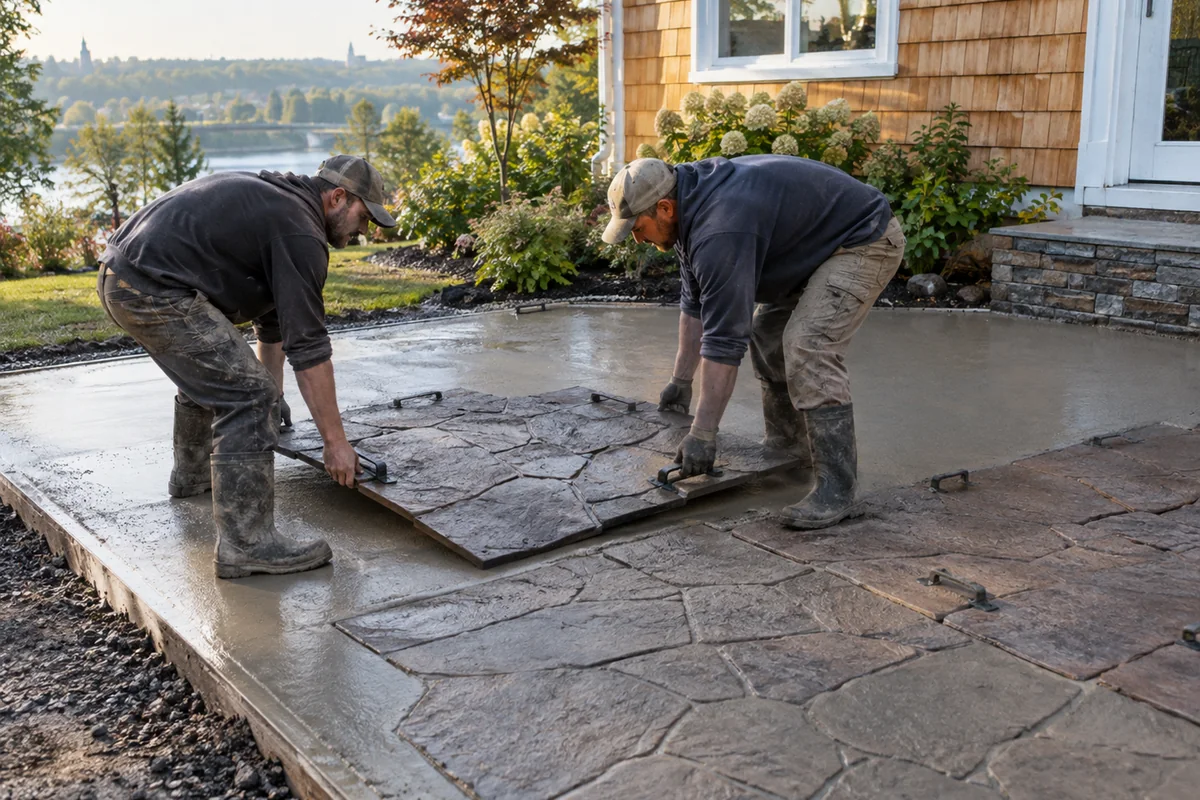
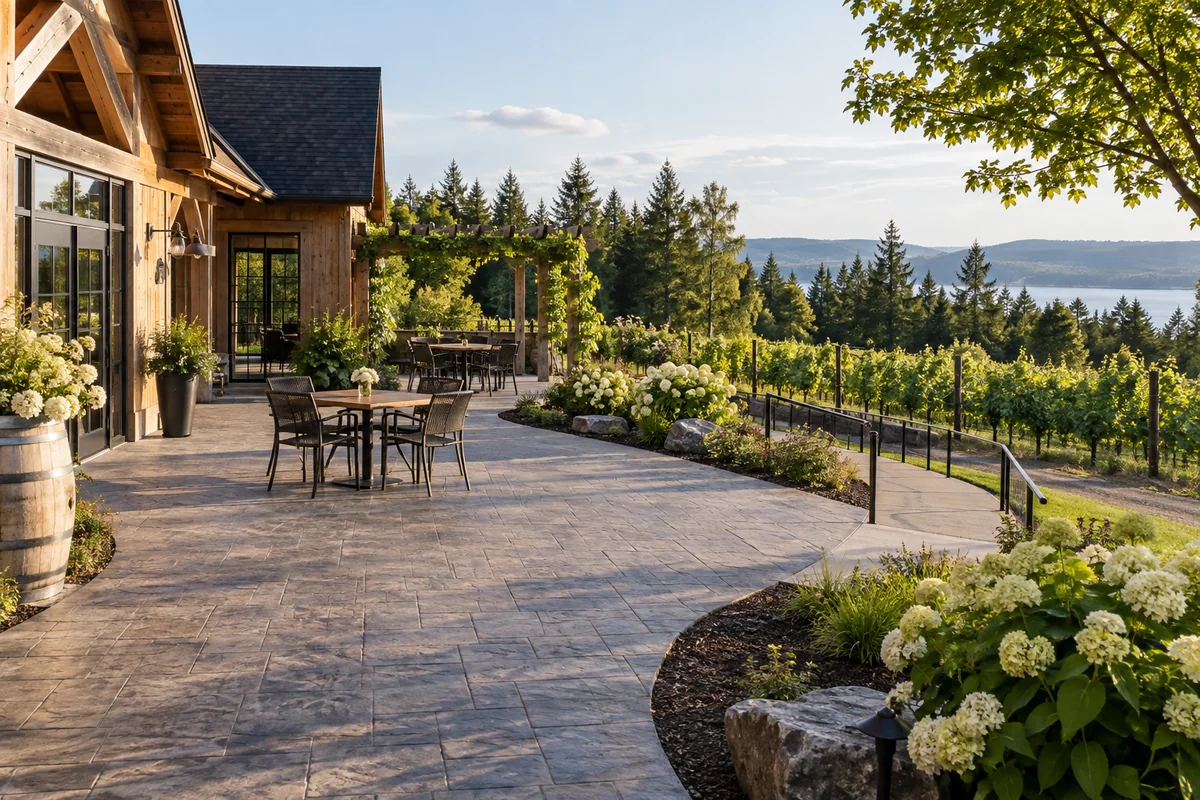
Stamped concrete works well on patios, terraces, walkways, and selected driveway areas where owners want the look of stone or pavers in a continuous slab. It can frame a middle-class cottage, create a dining area facing a waterway, or connect doors with gardens and steps. The location still needs good base support, drainage, useful joints, and a texture appropriate for wet feet and winter conditions. Large uninterrupted areas require a pattern and pour plan that crews can complete consistently. The design should support daily use and the scale of the house rather than relying on a busy pattern that dominates the landscape.
How are stamped-concrete colour and pattern selected?
Colour and pattern are selected by comparing physical samples with the home's siding, masonry, roof, and surrounding landscape in natural light. Integral or surface colour, release colour, antiquing, and sealer can look different across batches and weather conditions. Pattern scale should fit the area and hide planned joints where possible without pretending they do not exist. Exact uniformity is not realistic in hand-finished decorative concrete. Agreeing on an acceptable range and viewing sample work or mock-ups reduces surprises. Neutral earth, charcoal, and warm stone tones often age more quietly than strong colours, but the final choice belongs to the property context.
Why are drainage and joints still essential in decorative concrete?
Drainage and joints remain essential because stamping changes the surface appearance, not how concrete and water behave. Patios must slope away from buildings and avoid directing runoff toward neighbours, steps, or low lawn areas. Control joints give shrinkage a planned path and should be integrated with the pattern. Ignoring joints to preserve a seamless look invites random cracks that are harder to disguise. Downspouts, roof valleys, pool splash, and waterfront grades should be considered before forms are set. A good decorative layout makes these performance details look intentional rather than hiding them until a problem appears.
How does winter maintenance affect a stamped driveway?
Winter maintenance affects a stamped driveway through plow contact, de-icing products, freeze-thaw exposure, and water held in deep texture. The pattern should provide traction without creating fragile high points that equipment can strike. Drainage and exterior-grade concrete are important, while owners need clear guidance on de-icer use and sealing. A decorative driveway also carries repeated vehicle loads, so its base, thickness, joints, and transitions require the same attention as plain concrete. Choosing stamped concrete only for colour and pattern can overlook the harder performance demands at the road, garage door, and tire paths.
What does sealing do for stamped concrete?
Sealing can enrich colour, reduce staining, and limit water entry at the surface, but it does not make concrete waterproof or prevent structural cracks. The product, gloss, traction additive, surface condition, and application weather affect the result. Too much sealer or incompatible recoating can create whitening, peeling, or a slippery finish. Maintenance intervals vary with exposure and use rather than following one fixed promise. Owners should keep records of the product used and clean the surface before future applications. A test area is useful when changing products or refreshing older decorative work.
What should be shared for a stamped-concrete estimate?
A stamped-concrete estimate request should include the location, dimensions, intended use, current ground or surface, access, nearby doors and steps, drainage, preferred pattern and colour range, borders, curves, and schedule. Photos of the house and wider yard help relate the design to the property. For cottages or waterfront homes, note slope, shoreline access limits, seasonal roads, and concrete-truck turning space. Identify demolition, base, steps, walls, lighting sleeves, sealing, and landscaping interfaces. These details help price both the structural slab and the extra labour needed to create a consistent decorative finish.
Discuss your project
Share the location, scope, timing, and any site conditions that may affect the work.